
How AI Is Shaping (But Not Replacing) Journalism
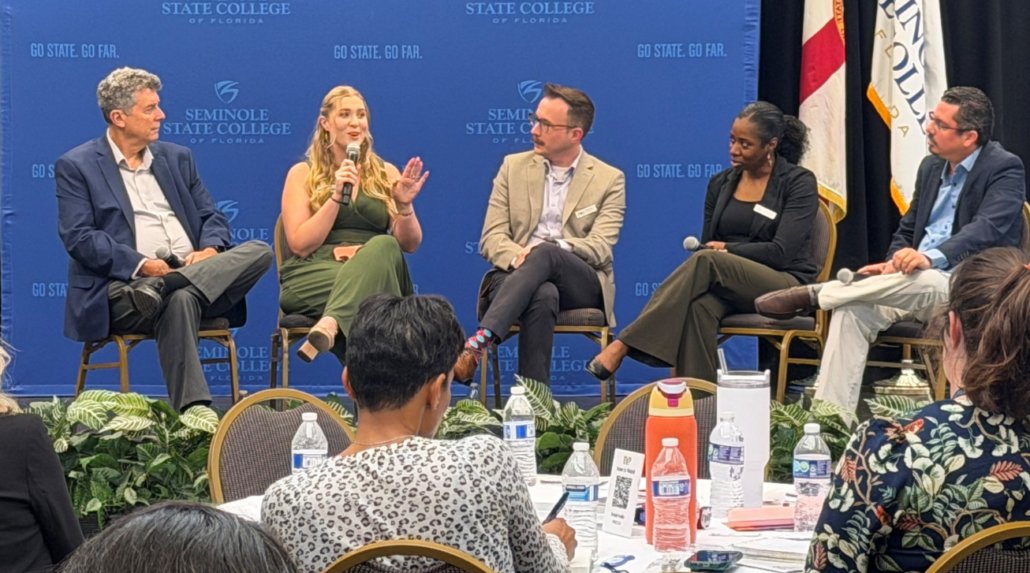
At Media Mashup 2026, held at Seminole State College’s Sanford/Lake Mary campus, newsroom leaders from across Central Florida came together to discuss the evolving media landscape.
During the discussion, one topic stood out: The growing role of artificial intelligence in journalism, and the clear boundaries surrounding its use.
The panel, moderated by Jennifer Marcial Ocasio of Equality Florida, included representatives from the Orlando Sentinel, Orlando Business Journal, WESH 2 News, Central Florida Public Media and Telemundo.
Across outlets and platforms, their message was consistent: AI is here, but it must be used responsibly, with strong human oversight.
AI as a Tool for Efficiency:
Newsrooms are beginning to integrate AI in ways that support — not replace — journalists’ work. Panelists shared examples such as reviewing lengthy documents, identifying key information, assisting with translations and streamlining internal workflows.
In an environment where resources are shrinking but expectations remain high, these tools can help reporters and editors work more efficiently. The goal is not to shortcut journalism, but to create more time for reporting, investigating and storytelling.
Clear Boundaries Around Content Creation:
While AI is being embraced, there was clear alignment on where to draw the line. Panelists emphasized that AI is not being used to write stories, scripts or publishable content.
Instead, it remains a back-end tool, with strict guidelines in place. Many organizations require human review for anything AI-assisted — especially translations or document summaries — and some have formal policies or committees dedicated to its use. Transparency also plays an important role, with disclosures when AI contributes to a process tied to content.
Trust, Verification, and the Human Element:
At the center of the conversation was trust. In a time of increasing skepticism toward media, accuracy and credibility remain non-negotiable.
Panelists stressed the importance of verification at every stage. AI may help surface information quickly, but it cannot replace editorial judgment. Journalists are still responsible for confirming facts, adding context and ensuring accuracy before anything reaches an audience. As several speakers emphasized, reputation is everything, and getting it right matters more than being the first to break the news.
AI will continue to evolve and likely become more integrated into newsroom operations. However, the panel made it clear that its role will remain supportive.
Journalism, at its core, is still a human endeavor, built on trust, accountability and the ability to tell meaningful, accurate stories. For communications professionals, understanding how newsrooms are using AI, and where they are drawing the line, can help strengthen relationships and better align with today’s media landscape.
PRSA Orlando thanks the panelists for sharing their insights during this important conversation, our event co-host FPRA Orlando, and event sponsors Seminole State College, Event Video Partners, Zaza Cuban Comfort Food, Field Pros and Drip Communications.
PRSA Resources on AI
The Public Relations Society of America (PRSA) offers resources to help communicators navigate AI responsibly, including guidance on prompting, ethics, transparency, governance, and emerging industry trends.
Additional tools, videos, and best practices are available through PRSA’s AI Insights hub.

